
Look, we get it. You didn’t launch your business to become a tax expert. You had a vision, maybe a killer product idea or a service gap you knew you could fill. The last thing you want to think about right now is IRS forms, state tax registration, and recordkeeping requirements.
But here’s the thing: ignoring tax compliance in your first year doesn’t make it go away. It just makes it more expensive, more stressful, and way more time-consuming when the IRS comes knocking. The good news? You don’t have to do this alone, and you definitely don’t need to panic.
Let’s walk through everything you need to know to keep your startup compliant, your stress levels manageable, and your bank account happy.
Don’t Panic, But Don’t Wait Either
Tax compliance isn’t some mysterious dark art reserved for accountants in tweed jackets. It’s actually pretty straightforward once you know the basics. The trap most founders fall into isn’t that the rules are too complicated, it’s that they wait too long to start caring about them.
When you’re juggling product development, customer acquisition, and just trying to keep the lights on, it’s easy to push tax stuff to the bottom of your to-do list. That’s totally understandable. But here’s the reality: the penalties for missing deadlines or filing incorrectly can seriously drain your startup’s resources. We’re talking late fees, interest charges, and in some cases, audits that eat up weeks of your time.
The solution? Build compliance into your routine from day one. Think of it like brushing your teeth, you don’t wait until you have a cavity to start caring about dental hygiene, right?

The 2026 Deadlines You Cannot Miss
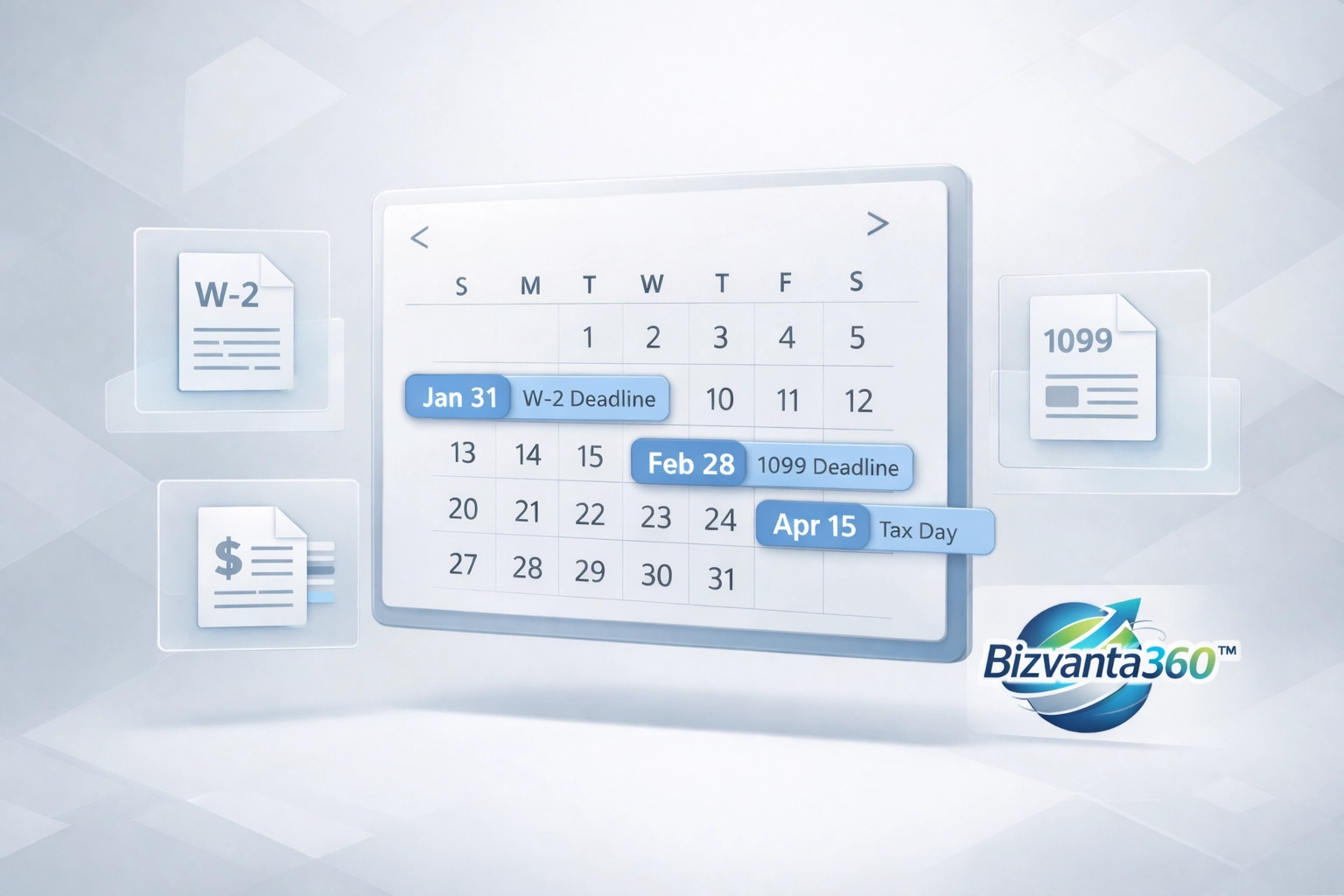
Let’s talk about the dates that need to be tattooed on your brain (or at least in your Google Calendar with three reminder alerts).
January 31, 2026 – This is your deadline for sending W-2s to employees and 1099-NEC forms to contractors who earned $600 or more. If you worked with freelancers, virtual assistants, or any independent contractors last year, you need to issue those 1099s. Missing this deadline can cost you $50 to $280 per form, depending on how late you are.
March 17, 2026 – If you’re structured as an S-Corporation or partnership, this is your tax return deadline. Yes, it’s earlier than the individual deadline. Yes, that catches a lot of people off guard their first year. File Form 1120-S (for S-Corps) or Form 1065 (for partnerships) by this date, or request an extension.
April 15, 2026 – The big one. This is when individual tax returns are due, along with C-Corporation returns (Form 1120). If your LLC is taxed as a sole proprietorship or disregarded entity, you’ll report your business income on Schedule C of your personal return. If you owe taxes, payment is also due on this date: extensions give you more time to file, but not more time to pay.
Pro tip: If you’re paying estimated taxes quarterly (which most new business owners should be), your Q1 2026 payment was due April 15, 2025. Your Q2 payment is due June 16, 2026. Mark these dates now.
The Recordkeeping Trap: Why Clean Books Matter Now
Here’s where a lot of first-year founders get burned. They think they can worry about organizing their finances “later” and just collect receipts in a shoebox (or worse, a random email folder). Then tax season rolls around, and they’re scrambling to piece together twelve months of transactions while also trying to run their actual business.
Small business bookkeeping isn’t just about satisfying the IRS. It’s about understanding your business. When your books are clean and up-to-date, you can see:
- Which products or services are actually profitable
- Where you’re overspending on overhead
- Whether you can afford to hire that next employee
- If you’re on track to hit your revenue goals
The IRS requires you to keep records for at least three years (four years for employment-related documents). That means every invoice, every receipt, every bank statement needs to be organized and accessible. If you get audited and can’t produce documentation, you could lose deductions worth thousands of dollars.
What you need to track:
- All revenue from sales and services
- Business expenses (rent, utilities, software subscriptions, marketing costs)
- Payroll costs and contractor payments
- Receipts for equipment, supplies, and business purchases
- Mileage logs if you use your vehicle for business
- Home office expenses if you’re working from home
Use accounting software like QuickBooks or Xero from the start. Connect your business bank account so transactions import automatically. Set aside 30 minutes every week to categorize expenses. This habit alone will save you dozens of hours and potentially thousands in accountant fees when tax time arrives.
Worker Classification: The 1099 vs. W-2 Minefield
This is huge, and it’s one of the most common compliance mistakes we see with new businesses. The IRS cares deeply about whether you’re classifying workers correctly, and they have an entire department dedicated to finding misclassifications.
Independent Contractors (1099-NEC):
- You control what work gets done, but not how or when they do it
- They use their own tools and equipment
- They can work for multiple clients
- They’re responsible for their own taxes
- You don’t provide benefits or pay employment taxes
Employees (W-2):
- You control their schedule and how they complete work
- You provide training, tools, and equipment
- They work primarily for your business
- You withhold income tax, Social Security, and Medicare
- You’re responsible for employer payroll taxes and may need to provide benefits
Misclassifying an employee as a contractor can result in back taxes, penalties, and fees that devastate a startup’s budget. If you’re unsure, err on the side of treating someone as an employee, or consult with a payroll services for small business provider who can guide you through the decision.
And here’s a reminder: if you pay a contractor $600 or more during the year, you must send them a 1099-NEC by January 31 and file a copy with the IRS. No exceptions.
The 2026 SALT Limit Increase: A Big Win for Startups
Let’s talk about some good news for a change. In 2026, the State and Local Tax (SALT) deduction limit has increased to $40,000 for businesses structured as pass-through entities (that’s S-Corps, partnerships, and LLCs taxed as such).
Previously, the SALT deduction was capped at $10,000, which hit a lot of business owners hard, especially in high-tax states. This increase means you can now deduct significantly more of your state income taxes, property taxes, and local business taxes on your federal return.
For a startup operating in a state like California, New York, or Illinois, this change can translate to thousands of dollars in tax savings. It’s one of the few times the tax code actually gives small businesses a break, so make sure you’re taking full advantage of it.

Work with a tax professional who understands how to maximize this deduction based on your specific business structure and location. The rules around pass-through entity taxation can get complicated, and you want to make sure you’re documenting everything correctly to support the deduction if the IRS ever questions it.
How Bizvanta360™ Takes the Weight Off Your Shoulders
Here’s the reality: you’re not going to become a tax expert overnight, and honestly, you shouldn’t have to. Your job is to build your business, serve your customers, and grow your revenue. Our job is to make sure the behind-the-scenes compliance stuff doesn’t derail your momentum.
At Bizvanta360™, we’ve built our entire service around eliminating the administrative burden that crushes too many startups in year one. Our Financial Excellence™ package includes:
Ongoing Bookkeeping Services:
- Daily transaction categorization and reconciliation
- Monthly financial statements that actually make sense
- Real-time dashboards so you always know where you stand financially
- Receipt management and documentation for IRS compliance
Payroll Services for Small Business:
- Automated payroll processing with tax withholding handled correctly
- W-2 and 1099 preparation and filing
- Worker classification guidance to keep you compliant
- Direct deposit setup and management
Business Compliance Services:
- Annual report filing in your state of registration
- Tax calendar management with deadline reminders
- Registered agent services so you never miss legal notices
- Ongoing compliance monitoring as tax laws change
We don’t just help you avoid penalties: we help you build a financial foundation that supports sustainable growth. When your books are clean, your taxes are filed on time, and your compliance is handled, you can focus on what actually moves the needle: serving customers and scaling your business.
Your Next Step: Stop Stressing, Start Delegating
Tax compliance doesn’t have to be the thing that keeps you up at night. With the right systems in place and the right partner supporting you, it becomes just another routine part of running a successful business.
If you’re reading this and thinking, “I need help with this right now,” you’re in the right place. We’ve helped hundreds of founders navigate their first tax season without the panic, the penalties, or the all-nighters spent sorting through receipts.
Ready to take tax stress off your plate for good? Let’s talk about how Bizvanta360™ can handle your small business bookkeeping, payroll, and compliance so you can focus on building something amazing.
Schedule a Free 30-minute Consultation and let’s build a compliance strategy that actually works for your business.
Your future self (and your accountant) will thank you.